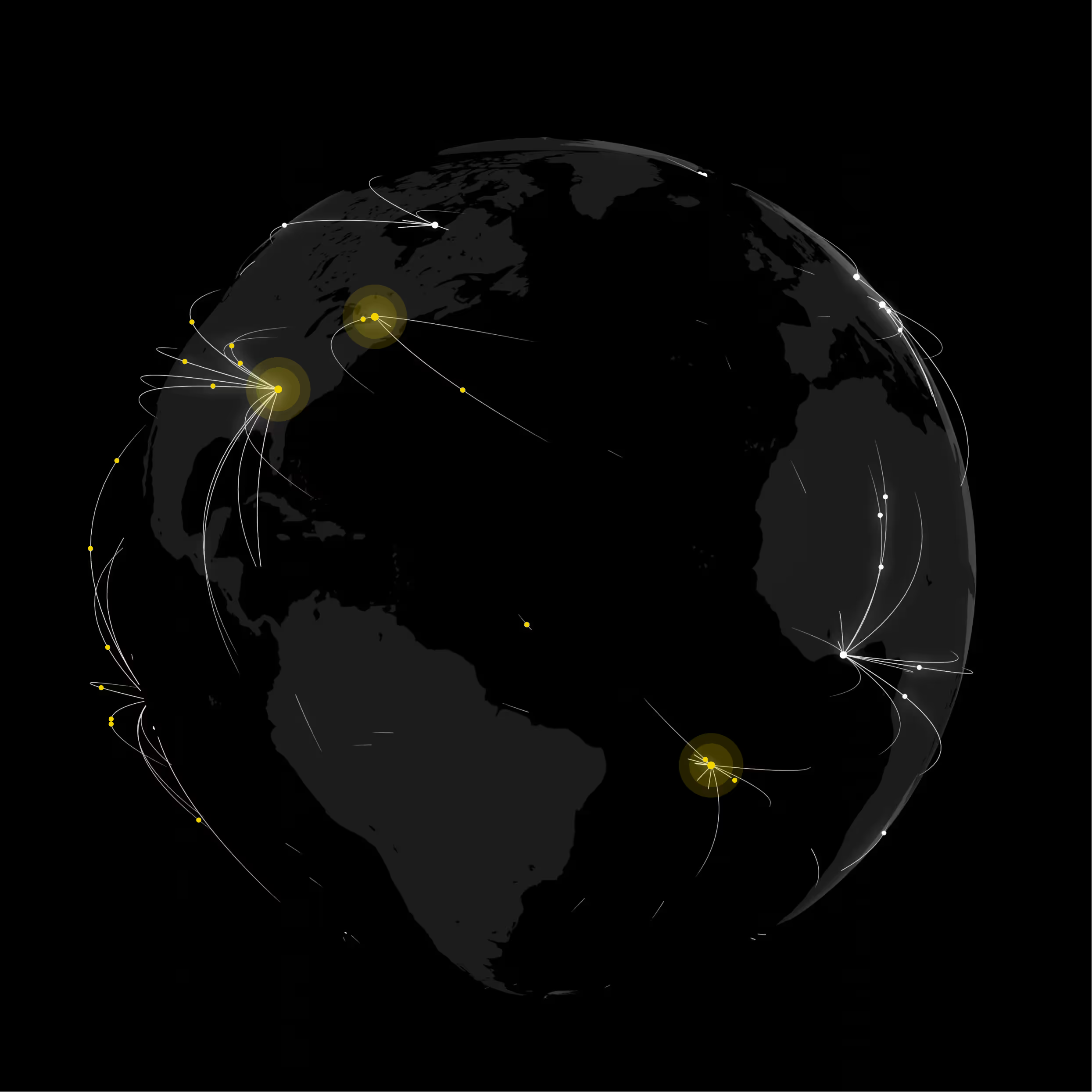
Compare threat risk across any location instantly with BaseScore
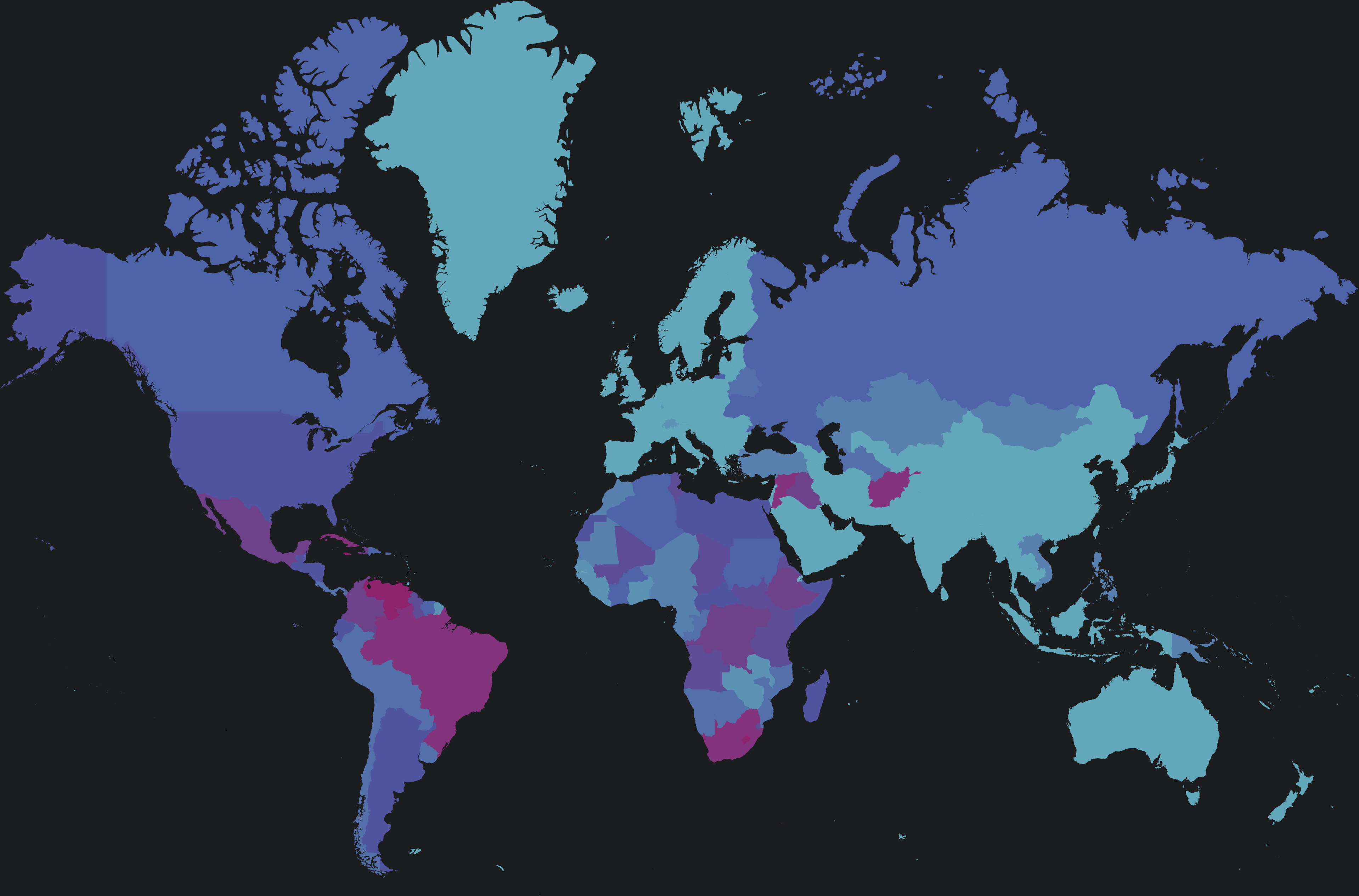
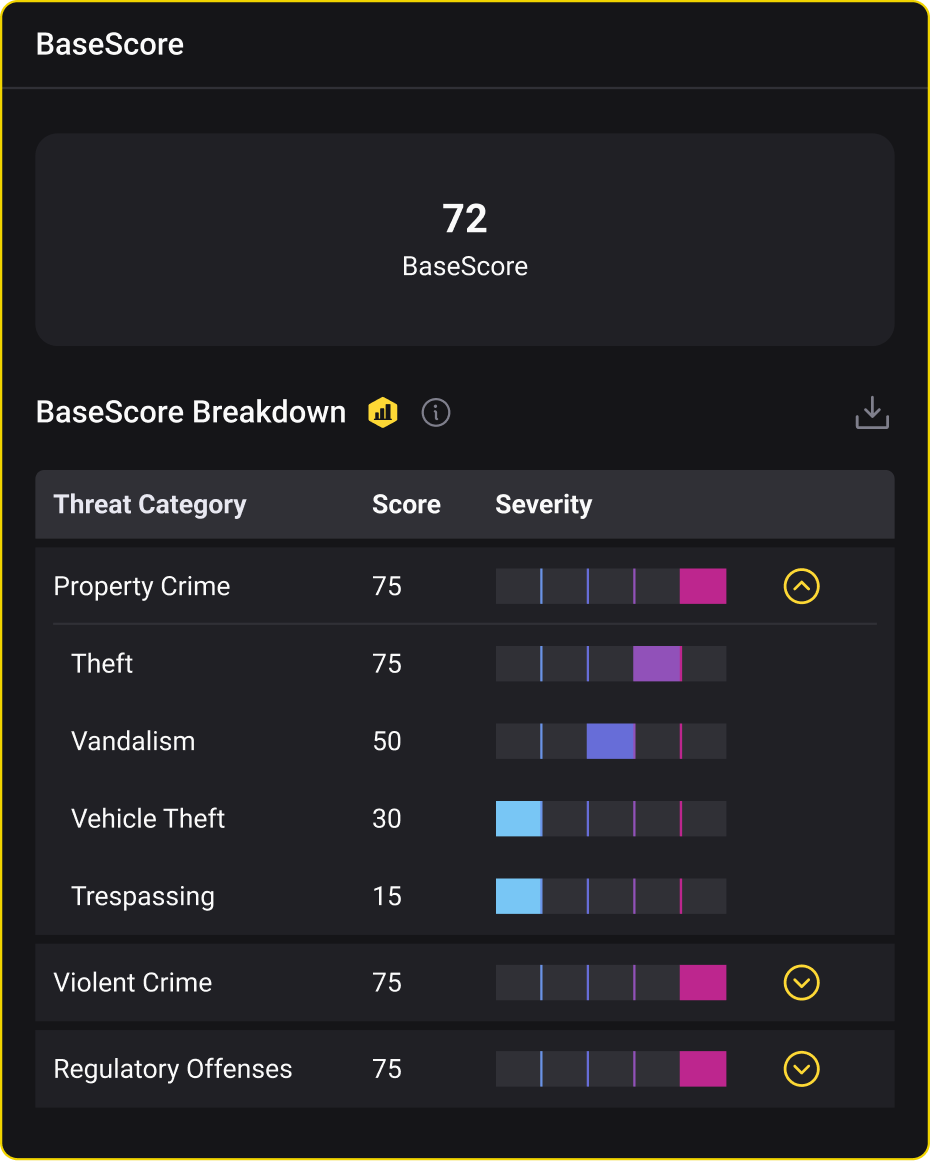
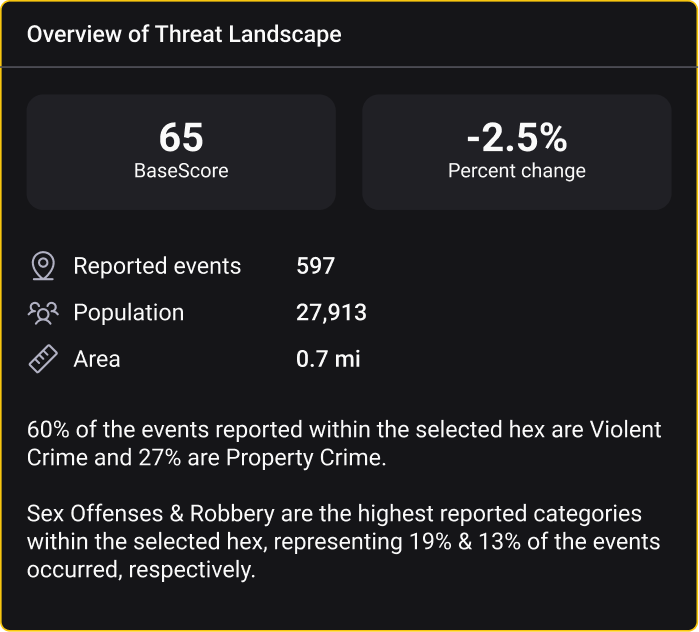
Get standardized 0-100 risk ratings at sub-mile granularity you can customize based on the threats most relevant to your business. So you can answer "Is our São Paulo office riskier than our Seattle office?" with defensible, quantified data instead of guesswork.


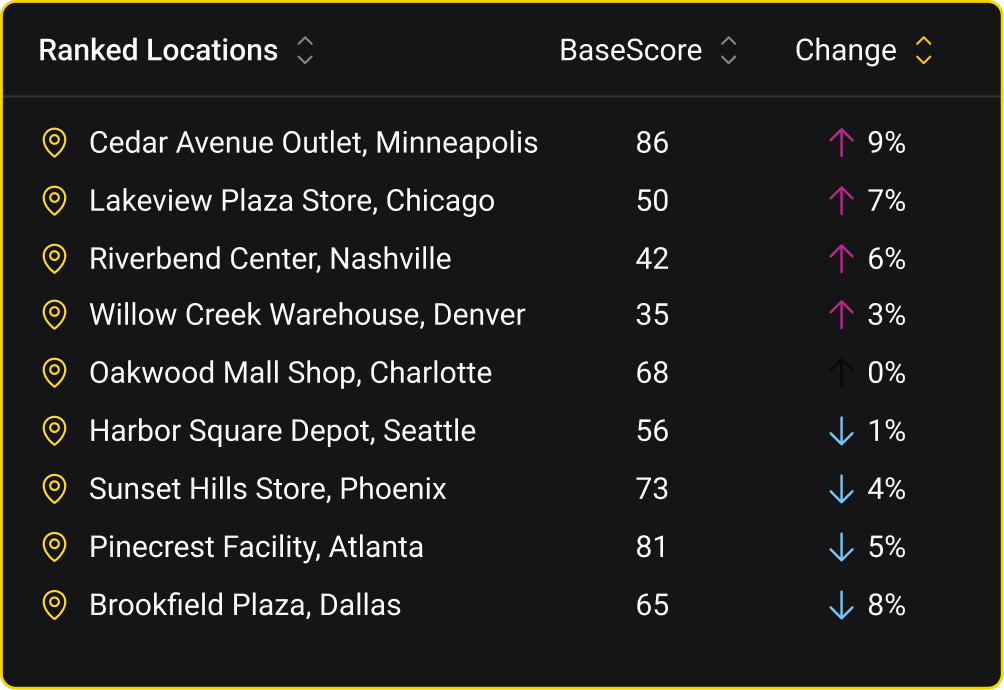
How security teams use BaseScore today
Site selection
Compare candidate locations before committing. Factor security costs into lease and M&A decisions. Identify high-risk sites for remediation priority.
Resource allocation
Quantify risk to justify guard deployment and budgets. Identify under-protected high-risk sites and optimize security investments.
Executive protection
Pre-trip assessments for global destinations. Route through lower-risk corridors. Document duty-of-care compliance for traveling executives.
Portfolio oversight
Track BaseScore threat trends across your entire location footprint. Automate monitoring to identify emerging threats and plan ahead.

Make proactive security decisions with global, street-level intelligence
Finally answer "which locations are highest risk?"
Your analysts use different data sources in every region. Government stats here, police reports there, 18-month-old FBI data somewhere else. BaseScore applies one methodology across 5,000+ global cities with a unified 0-100 scale. Compare São Paulo to Singapore to San Francisco and give leadership a defensible answer in minutes.
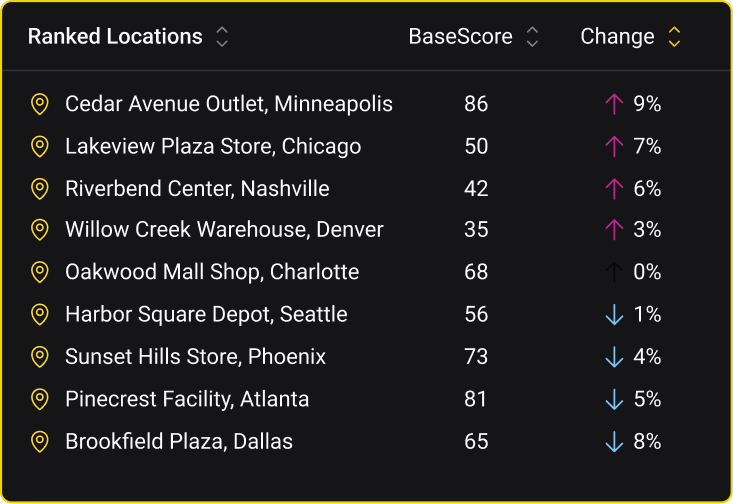

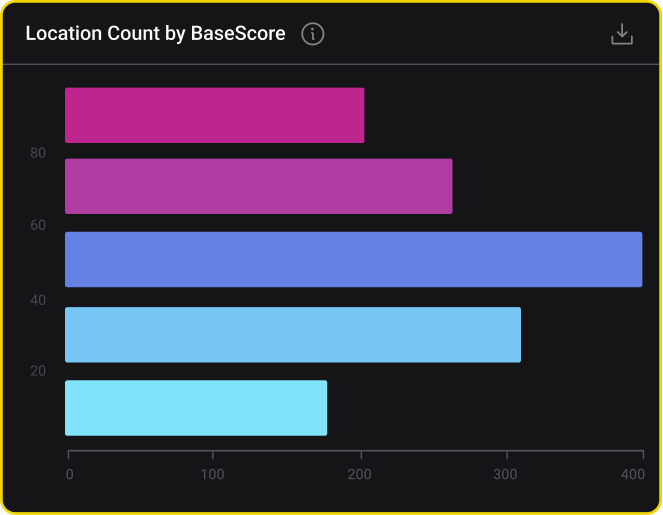
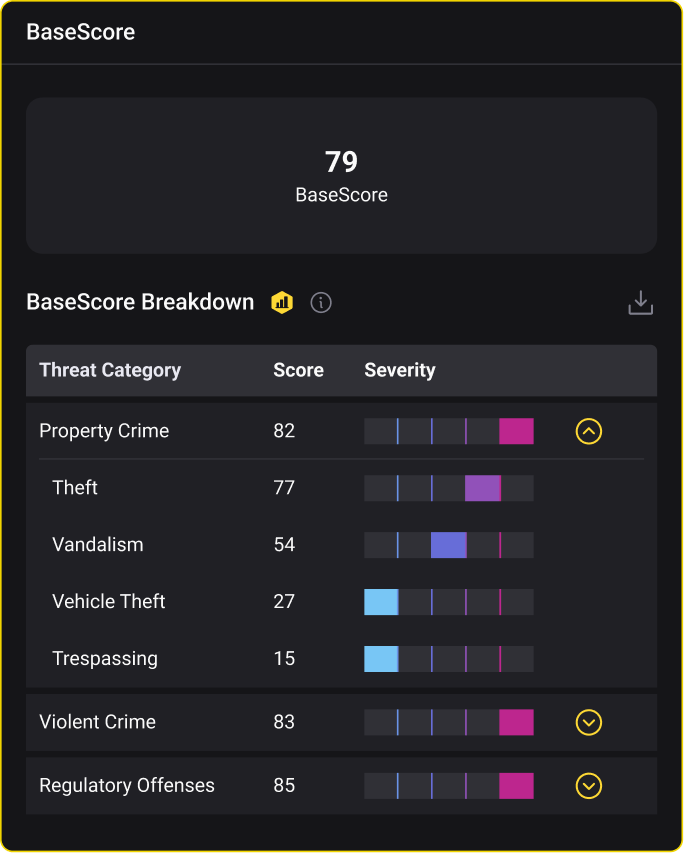


See risk at street level, not city or country level.
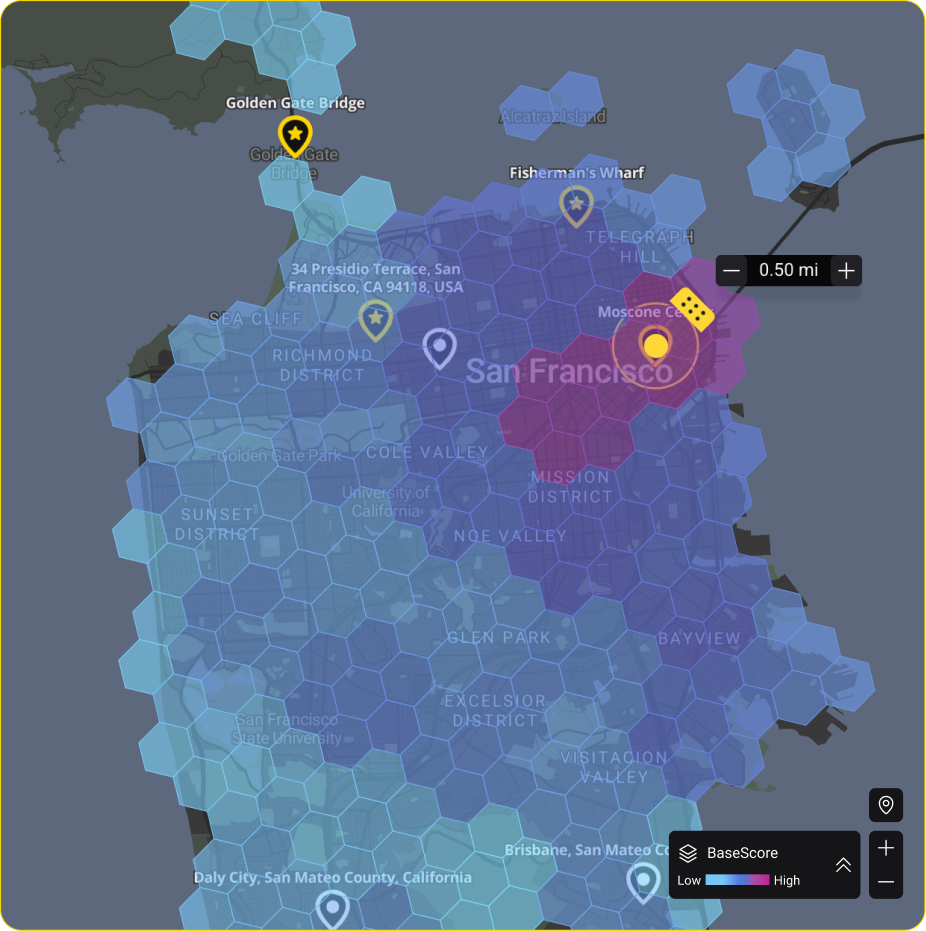
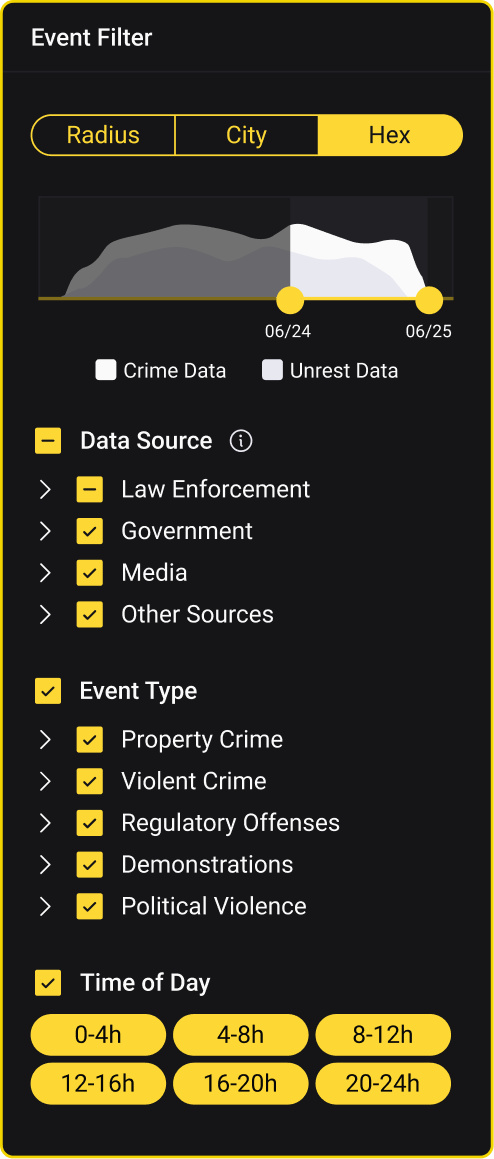
"Mexico City is dangerous" isn't actionable. Your Polanco office has vastly different risk than a Tepito warehouse. BaseScore maps 250M+ incidents down to 0.1 mile radius precision, so you can drill from country to city to neighborhood to specific blocks.
Trust data that's current and validated.
Government statistics lag 6-24 months. Single sources have blind spots. BaseScore triangulates 25,000+ sources with monthly crime updates and bi-weekly unrest indicators, so you catch more incidents than single-source methods. Scale from 50 locations to 500 without adding headcount.


Customize BaseScore to your needs
BaseScore provides standardized methodology for comparability, with flexibility where it matters.
Threat categories
Only include threats most relevant to your operations.
Alert configuration
Set triggers for score changes that matter via API.
Reporting formats
Embed in your existing security reporting cadence.
BaseScore Specifications
Coverage
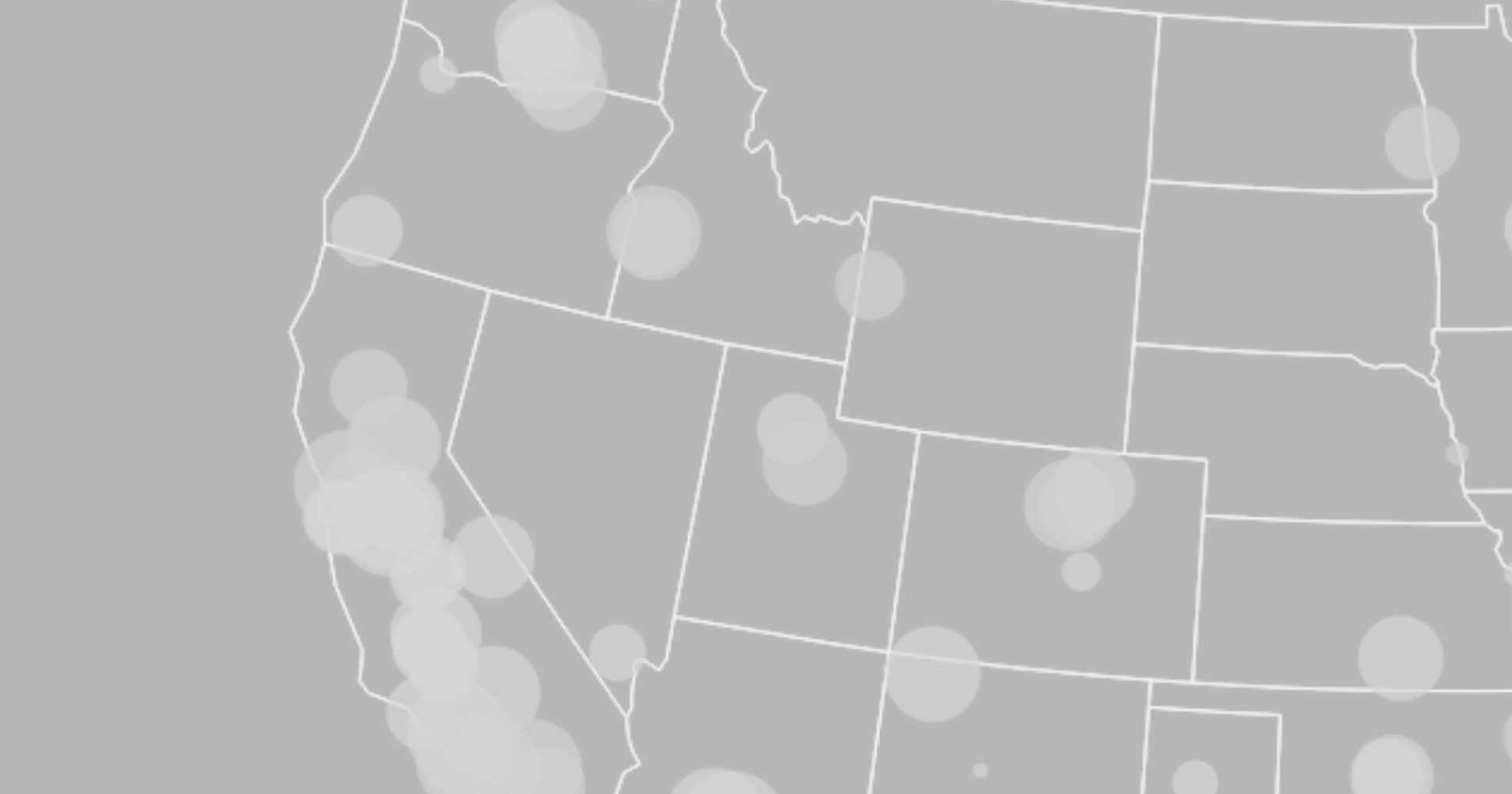
5,000+ cities globally, 99% US coverage including rural areas
Granularity
H3 hexagonal cells and down to 0.1 mile radius
Score Range
0-100 (higher = higher risk)
Crime Categories
13 types: homicide, assault, robbery, burglary, theft, vehicle theft, sexual assault, kidnapping, fraud, vandalism, drug offenses, weapons offenses, other violent crime
Update Frequency
Monthly
Analysis Levels
Radius (0.1-5 mi), Hex (0.7 mi), City, Country
Data Sources
25,000+ global sources
Data Volume
250M+ mapped incidents
Access Methods
Web dashboard, API, Bulk export
Grid System
H3 cells (industry standard used by Uber)

FAQs
Common questions about our threat intelligence API.