MetLife Stadium (East Rutherford, New Jersey) FIFA World Cup 26 Threat Assessment
Security threat assessment for matches hosted at Metlife Stadium (New Jersey, United States) during the FIFA World Cup 26. Threat assessment based on two years of historical crime and unrest data within 5 miles of venue and 1.5 miles of nearby transit hub.
OVERVIEW
- Date Assessment Prepared: April 13, 2026
- Data Coverage Period: October 2023 – September 2025
- Stadium Location: MetLife Stadium
- Transit Hub Location: Meadowlands Rail Station
- Host City: East Rutherford (New York/New Jersey Metropolitan Area), USA
- Event: FIFA World Cup 2026 (Group Stage, Knockout Rounds & Final)
- Event Window: June 11 – July 19, 2026
Methodology Disclaimer This assessment integrates Base Operations quantitative threat data with qualitative intelligence from open sources collected via deep research AI agents. Confidence levels reflect source reliability: High (government/Base Operations verified data), Medium (multiple corroborating sources), Low (single source/extrapolated). AI agents can provide incorrect or misleading information. To ensure the accuracy of stadium threat assessment, analyze the latest data in Base Operations.
1. EXECUTIVE SUMMARY
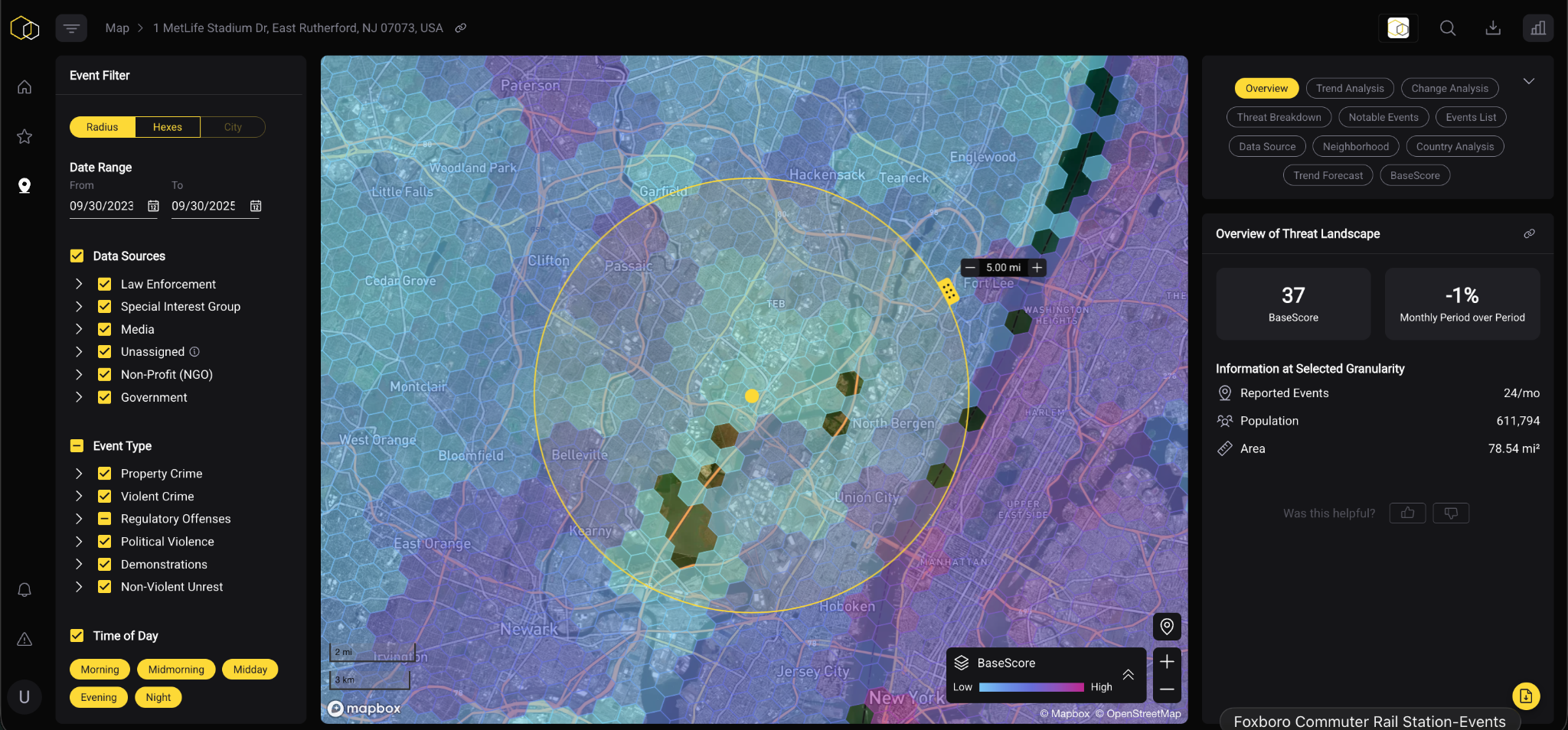
MetLife Stadium presents a LOW BaseScore Risk Tier (BaseScore 37) based on Base Operations validated threat intelligence covering October 2023 through September 2025 within a 5-mile radius. The associated Meadowlands Rail Station transit hub also presents a LOW BaseScore Risk Tier (BaseScore 32). While the quantitative baseline reflects a contained threat environment, the qualitative risk is substantially elevated by the venue's designation as host of the FIFA World Cup 2026 Final — making it one of the highest-value soft-target environments in the Western Hemisphere during the tournament window.
The LOW baseline should not be interpreted as a permissive operational context. The World Cup Final designation concentrates heads of state, VIP principals, and global media into a single location — elevating every threat category above its historical baseline. The Meadowlands Rail Station represents the primary mass transit chokepoint for 82,500 spectators per match and has been identified in Congressional testimony as requiring dedicated federal law enforcement presence. State-sponsored Foreign Intelligence Services (FIS) represent the highest-confidence non-kinetic threat, assessed as likely to conduct signals intelligence collection against VIP delegations throughout the operational period.
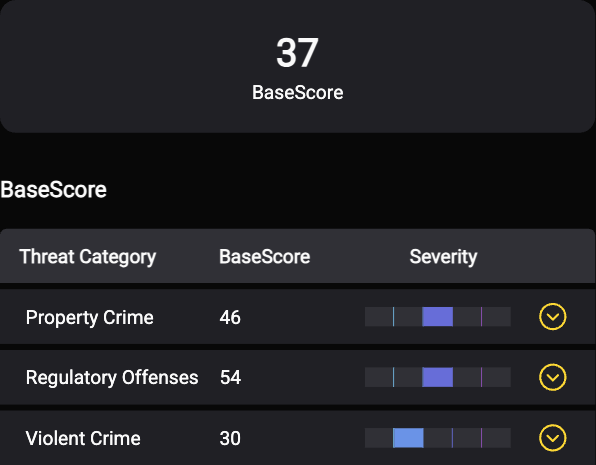
Base Operations indicates an overall BaseScore of 37, placing the stadium perimeter in the LOW Risk Tier (20–40) based on historical data. The Meadowlands Rail Station registers a BaseScore of 32 (LOW Risk Tier). The station will serve as the primary mass transit ingress/egress point for 82,500 spectators per match.
Top Threats:
- Domestic Violent Extremism — HVE/RME Soft-Target Attack (Medium-High Confidence): The New York/New Jersey metropolitan area historically ranks among US regions with the greatest number of domestic terrorism incidents and remains the highest-profile symbolic target in North America for extremist actors seeking maximum media impact.
- State-Sponsored Cyber Espionage / FIS Activity (High Confidence): The concentration of heads of state and senior government officials creates a high-value signals intelligence collection environment for foreign intelligence services throughout the operational period.
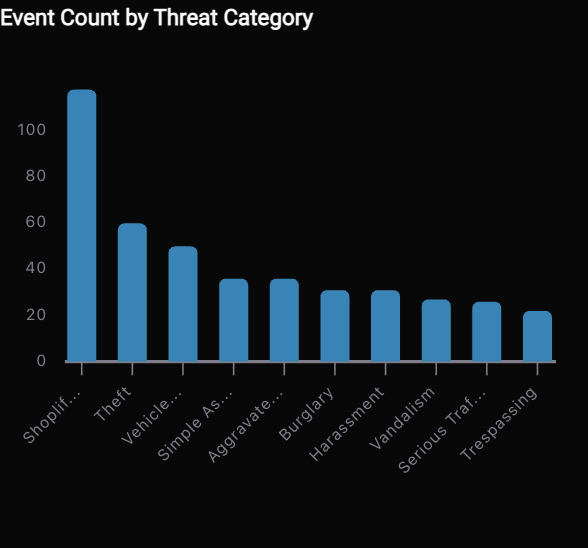
- Opportunistic Property Crime & Organized Retail Crime (High Confidence): Shoplifting (~110 incidents) leads all categories; Theft (~58 incidents) and Vehicle Theft (~48 incidents) follow. Property crime drives a sub-score of 46 (MEDIUM).
- Transit Infrastructure Disruption / Logistical Delay (High Confidence): Secaucus Junction remains the highest-priority transit chokepoint. An FAA staffing waiver at Newark Liberty International Airport creates a high probability of ground delays and extended terminal dwell time for VIP principals.
- Activist / Protest Disruption of Transport Corridors (Medium Confidence): Decentralized groups capable of physical blockades to disrupt operations and leverage international media visibility to pressure corporate sponsors.
Strategic Takeaways: Security Directors must adopt a posture of "Elevated Baseline Awareness." The LOW composite score masks meaningful sub-score elevations in Regulatory Offenses (54) and Property Crime (46) that reach the Medium tier. The primary risks to personnel are digital compromise via state-sponsored espionage, operational disruption via transit bottlenecks, and property crime targeting VIP vehicles and assets in the commercial buffer zones surrounding the stadium. The seasonal crime surge (June–August, +25% above annual average) aligns precisely with the tournament window.
2. EVENT SNAPSHOT
Event Scope & Significance The FIFA World Cup 2026 will take place from June 11 through July 19, 2026 across venues in the United States, Canada, and Mexico. MetLife Stadium has been designated as the host venue for the World Cup Final — the single highest-profile match in global sport. The venue holds 82,500 spectators in an open-air configuration. The operational security template from Super Bowl XLVIII required coordination of over 500 officers from 22 agencies; the scale of the World Cup Final creates a security environment without comparable precedent in the venue's history (High Confidence).
Political Context: The concentration of heads of state, senior government officials, FIFA executive leadership, and Fortune 500 corporate executives produces a target-rich environment that elevates every threat category above its historical baseline. Federal prosecutors in the Eastern District of New York previously indicted nine FIFA officials and five corporate executives for racketeering and corruption, establishing the World Cup organizational ecosystem as an active vector for financial crime and potential OCG entanglement.
Match Timing: Evening kickoffs — the most common scheduling slot for high-profile World Cup matches — align precisely with peak property crime windows (Evening: 173 incidents over the coverage period), heightening the risk environment for attendees and staff.
VIP Profile
- High Confidence: Heads of state, senior government officials, FIFA executive leadership, Fortune 500 CEOs, and global media principals.
- Medium Confidence: International business leaders and diplomatic delegations leveraging the event for relationship development.
- Elevated Risk: VIP corporate executives exposed to potential OCG entanglement via FIFA corruption networks; all VIP delegations are targets for FIS signals intelligence collection.
3. AREA & INFRASTRUCTURE OVERVIEW
Geographic Context MetLife Stadium is located within the Meadowlands Sports Complex in East Rutherford, New Jersey, approximately 8 miles (13 km) west of Midtown Manhattan. The venue sits on low-lying reclaimed wetland in the Hackensack Meadowlands — a factor with direct operational implications for severe weather risk, including thunderstorms, flash flooding, and extreme summer heat and humidity. The open-air design means all spectator ingress and egress, and the majority of VIP movement, occurs in an unsheltered exterior environment exposed to both weather and crowd dynamics.
Transportation Infrastructure
- Meadowlands Rail Station (Primary Transit Hub): Located approximately 0.2 miles (320 m) from the stadium entrance. Serves the NJ Transit Meadowlands Rail Line and functions as the primary mass transit ingress/egress point. Base Operations data within a 1.5-mile radius records a BaseScore of 32 with approximately 4 total incidents over the two-year coverage period — the lowest documented baseline of any location in this assessment. Coordinates: 40.8128°N, 74.0719°W. Risk Profile: This station is a singular point of failure for mass transit. Limited ingress/egress capacity creates crowd crush vulnerabilities and chokepoints susceptible to protest blockades.
- Secaucus Junction (Critical Chokepoint): The primary transfer hub connecting New York Penn Station to the Meadowlands Rail Line. Congressional testimony regarding Super Bowl XLVIII security identified this rail corridor as requiring dedicated CBP and TSA VIPR team presence on major event days (High Confidence). This remains the highest-priority transit chokepoint for VIP logistical planning.
- Road Access: The stadium is accessed via NJ Turnpike (I-95), Route 3, and Route 120. All three routes are subject to severe congestion during stadium events, creating extended exposure windows for VIP motorcades.
- Air Access: Newark Liberty International Airport (EWR) is the primary international gateway, approximately 10 miles (16 km) south of the venue. An FAA staffing waiver at EWR through the Summer 2026 scheduling season creates a high probability of ground delays and extended terminal dwell time for VIP principals (High Confidence).
Commercial & Hospitality Infrastructure The immediate stadium precinct is largely industrial with limited retail or hospitality within 1 mile (1.6 km). High-end commercial activity and VIP lodging are concentrated in Midtown Manhattan, Jersey City, and Newark — all of which require transit through multiple chokepoints and extend VIP exposure windows.
Critical Infrastructure Vulnerabilities
- Secaucus Junction Interchange: A single primary transfer point vulnerable to capacity overload, protest activity, and requiring dedicated federal law enforcement presence on match days.
- Stadium Parking: Large surface lots serve as the primary target zone for vehicle crimes and property offenses.
- Emergency Services: Hackensack University Medical Center (approximately 5 miles/8 km) is the designated regional trauma center. MetLife Stadium is designated a FEMA Mission Ready Venue, confirming baseline disaster response integration. Law enforcement coordination involves NJ State Police (primary jurisdiction), Bergen County Sheriff's Office, FBI Newark Field Office, and DHS/Secret Service for VIP protection.
4. HISTORICAL INCIDENT REVIEW
Past security incidents at MetLife Stadium and in the wider region provide critical intelligence for World Cup 2026 planning.
Security Failures & Challenges
- Super Bowl XLVIII (2014, High Confidence): The stadium hosted Super Bowl XLVIII, requiring 500+ law enforcement officers from 22 agencies, armed aerial security assets, dedicated federal rail patrols on the Secaucus Junction corridor, and CBP VACIS operations for perimeter vehicle screening. This event established the baseline security architecture template for all major gatherings at this venue.
- 2017 Parking Lot Fire (Medium Confidence): A vehicle fire in the MetLife Stadium parking lot during a concert event caused tailgate disruption and demonstrated vulnerabilities in vehicle access control at the perimeter.
- 2015 Crowd Disorder (Medium Confidence): Law enforcement responded to crowd disorder outside the stadium during a large concert event, highlighting crowd management challenges in the uncontrolled perimeter environment.
- FIFA Corruption Cases (2015, High Confidence): Federal prosecutors in the Eastern District of New York indicted nine FIFA officials and five corporate executives for racketeering and corruption, establishing the World Cup organizational ecosystem as an active vector for financial crime. This exposes VIP corporate executives to potential OCG entanglement.
- Pan American Games Cyber Breach (2011, Guadalajara, Medium Confidence): A cyber intrusion compromised accreditation data for journalists at a major international sporting event, establishing a precedent for credential system targeting that applies to the World Cup accreditation environment.
- NYC/NJ Regional Terrorism History (High Confidence): The New York/New Jersey metropolitan area historically ranks among US regions with the greatest number of domestic terrorism incidents and remains the highest-profile symbolic target in North America for extremist actors seeking maximum media impact.
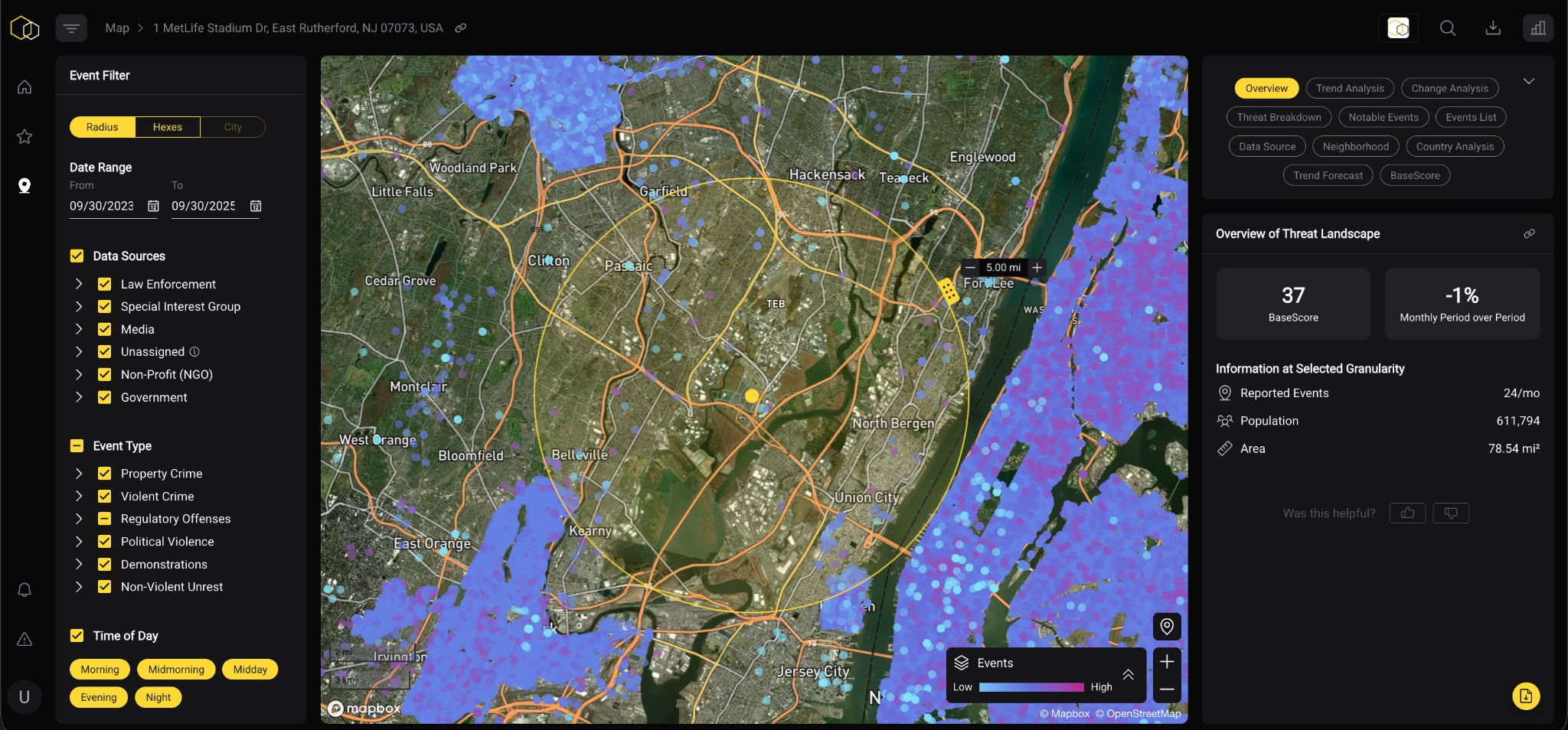
Base Operations Historical Pattern Base Operations data confirms a sustained and consistent crime environment within the 5-mile stadium radius, averaging approximately 20 incidents per month over the two-year coverage period. There are no documented dramatic escalations or anomalous single-month spikes in the dataset — the threat profile is stable and predictable, enabling reliable baseline comparison for World Cup monitoring purposes.
5. CURRENT THREAT LANDSCAPE
5.1 Crime Trends & Opportunistic Threats
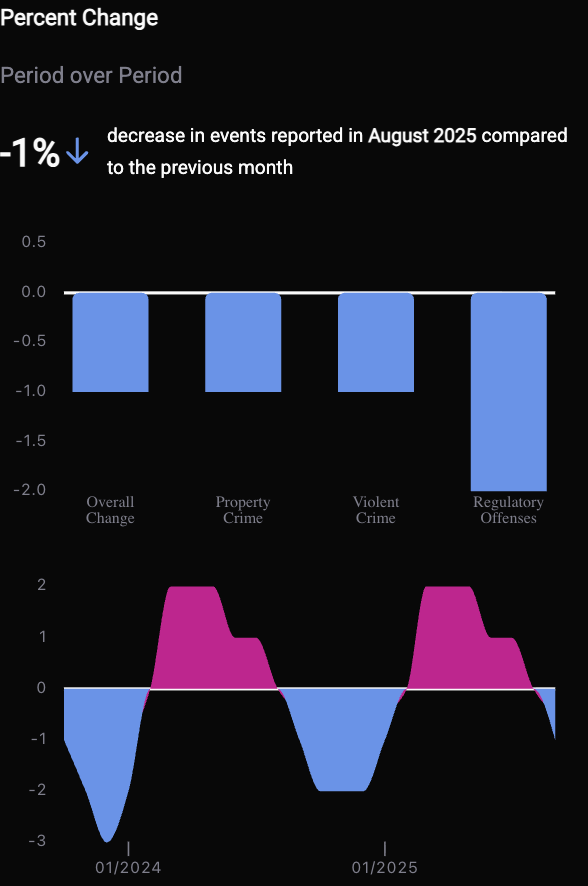
Base Operations validated threat intelligence covering October 2023 through September 2025 within a 5-mile radius of MetLife Stadium reflects a BaseScore of 37 (LOW Risk Tier). The overall trend is marginally declining, with a 1% month-over-month decrease recorded in August 2025. The Base Operations Monthly Crime Trend Forecast projects incident volume stabilizing at approximately 17 events per month through mid-2026, with no structural escalation forecast for the tournament period.
Quantitative Analysis
Property crime represents the dominant threat vector by incident volume, driving a sub-score of 46 (MEDIUM). This reflects meaningful baseline exposure for executives and support staff operating within the stadium's commercial zones.
- Incident Volume: Shoplifting is the most frequent occurrence (~110 incidents), accounting for approximately 27% of all recorded activity within the stadium radius. Other significant contributors include Theft (~58), Vehicle Theft (~48), Burglary (~30), Vandalism (~27), and Trespassing (~20).
- Violent Crime: 140 total incidents over the coverage period, placing its sub-score at 30 (LOW Risk Tier). Simple Assault (~35 incidents), Aggravated Assault (~33 incidents), and Harassment (~29 incidents) are the primary categories.
Temporal Patterns
- Seasonal Peak: June through August shows monthly averages approaching 25 events — approximately 25% above the annual average of 20. This seasonal elevation coincides with the World Cup tournament window (June 11 – July 19, 2026).
- Time of Day: Criminal activity is heavily concentrated in the Evening (173 incidents), with a secondary peak during Midday (106 incidents). Violent Crime concentrates in Morning hours (91 incidents), with a secondary concentration at Midmorning (51 incidents).
- Operational Alignment: Evening kickoffs align precisely with peak property crime windows. Pre-match movements and venue reconnaissance windows align with documented peak violent crime hours and represent the highest-risk temporal window for executive movements.
5.2 Terrorism & Extremism
The terrorism threat landscape for the World Cup at MetLife Stadium is dominated by the persistent threat of domestic violent extremism and the unique force-multiplier of the venue's geographic symbolism.
Domestic Violent Extremists (DVEs)
DVEs maintain intent for symbolic violence against the New York/New Jersey metropolitan area. The World Cup Final's global visibility presents an attractive target for maximum media impact.
- Tactical Analysis: Low-complexity attacks (vehicle ramming, edged weapons, arson) targeting pedestrian zones and convoys remain the primary tactical concern. These require no specialized training or acquisition of controlled materials.
- Implications for World Cup: Counter-UAS authorities are a high-priority requirement for 2026. The White House Task Force on the FIFA World Cup 2026 has co-hosted events with DRONERESPONDERS and the Commercial Drone Alliance on countering drone threats.
- Regional Precedent: The NYC/NJ metropolitan area's history of terrorism incidents — from the 1993 World Trade Center bombing through the 2016 Chelsea bombing — confirms sustained targeting intent by both foreign-directed and homegrown violent extremists.
Unmanned Aerial Systems (UAS) / Drone Threats
- The FAA will establish a Temporary Flight Restriction (TFR) over MetLife Stadium during match days.
- Commercial drones can be modified to carry small payloads or chemical irritants.
- DHS Science & Technology Directorate has deployed detection and mitigation technologies at prior NSSEs.
5.3 Activist & Protest Activity
The World Cup at MetLife Stadium is a medium-probability target for disruptive activism due to the convergence of international media visibility with ongoing political flashpoints.
Anticipated Activist Groups
- Labor & Human Rights Organizations: FIFA's World Cup has historically attracted activist campaigns focused on labor rights, migrant worker conditions, and host city displacement. Groups may leverage the Final to pressure corporate sponsors with global media visibility.
- Anti-Policing / "Stop Cop City" Networks: While primarily Atlanta-based, the "Stop Cop City" movement has demonstrated capacity for national coordination. The militarized security posture around MetLife Stadium may attract symbolic protest from anti-police anarchist networks.
- Target Locations: Stadium gate areas, transit corridors (Secaucus Junction, Meadowlands Rail Station), and hotel lobbies are the highest-probability locations for activist disruption.
Impact: The primary risk to executives is logistical disruption. A coordinated blockade at Secaucus Junction or the Meadowlands Rail Line could delay VIP movements and force static exposure in unsecured zones.
5.4 Cyber & Information Risks
The digital threat to the World Cup at MetLife Stadium is ELEVATED. The concentration of government principals and corporate VIPs creates a premium intelligence collection environment for state-sponsored actors.
State-Sponsored Cyber Espionage / FIS Activity
- Scope: Foreign Intelligence Services are assessed as likely to conduct signals intelligence collection against VIP delegations throughout the operational period (High Confidence).
- Modus Operandi: IMSI catchers, rogue Wi-Fi access points, and targeted device compromise in hotel and transit environments.
- Targets: Government delegation communications, corporate executive devices, and FIFA accreditation systems.
Credential System Targeting
- The 2011 Pan American Games cyber breach (Guadalajara) established a precedent for accreditation system targeting at major international sporting events.
- The World Cup accreditation environment — encompassing media, VIP, and operational credentials — is an active attack surface.
Infrastructure & Supply Chain Risks
- Third-party vendors (concessions, cleaning, logistics) often lack equivalent cybersecurity hardening.
- Ransomware groups may target critical infrastructure (ticketing systems, stadium operations) seeking high-profile payout.
- The City of Atlanta ransomware attack (2018) demonstrated vulnerability of municipal systems supporting major venues.
6. THREAT ACTOR PROFILES
1. Organized Retail Crime (ORC) Networks
- Risk Level: HIGH for property; MEDIUM for confrontation.
- Modus Operandi: Low-complexity theft operations targeting high-value portable assets and VIP personnel during transit. Sophisticated, multi-person teams employ countersurveillance and fencing networks.
- Capabilities: Teams exploit the high-density event environment to target vehicles and unattended assets in parking areas and commercial buffer zones.
- Indicators: Loitering in parking zones, vehicles with obscured plates, and spotters watching for VIP arrivals.
2. Opportunistic Criminal Networks
- Risk Level: MEDIUM for theft; LOW for physical harm.
- Modus Operandi: Pickpocketing and distraction theft targeting distracted crowds at transit hubs and gate queues.
- Capabilities: Teams of 2–5 individuals using "stalls" or staged arguments to distract targets while accomplices remove wallets or phones.
- Targeting: High congestion areas including Meadowlands Rail Station, Secaucus Junction, and stadium entry bottlenecks.
3. State-Sponsored Foreign Intelligence Services (FIS)
- Risk Level: CRITICAL for non-kinetic espionage; HIGH for reputational/diplomatic harm.
- Modus Operandi: Signals intelligence collection against VIP delegations using IMSI catchers, rogue Wi-Fi, and targeted device compromise in hotel and transit environments.
- Capabilities: Nation-state resources enabling persistent surveillance of government and corporate principals.
- Targeting: Heads of state, senior government officials, corporate executives, FIFA leadership.
4. Activist Networks
- Risk Level: MEDIUM for disruption; LOW for physical harm to VIPs.
- Actors: Labor rights organizations, anti-policing networks ("Stop Cop City" affiliates), human rights advocacy groups.
- Modus Operandi: Physical blockades at transit chokepoints, drone operations for media visibility, protest actions at sponsor-affiliated locations.
- Impact: Logistical disruption to VIP movements; risk of incidental involvement in civil disturbance.
5. Domestic Violent Extremists
- Risk Level: MEDIUM-HIGH for soft-target attack; MEDIUM for infrastructure disruption.
- Modus Operandi: Low-complexity attacks (vehicle ramming, edged weapons, arson) targeting pedestrian zones. May target infrastructure (power, communications) rather than hardened stadium.
- Regional Precedent: NYC/NJ metropolitan area's sustained history of domestic terrorism incidents confirms ongoing targeting intent.
7. KEY TAKEAWAYS
7.1 For Corporate Security Directors
- Eliminate Single-Mode Transit Dependency: VIP movements must not rely solely on the Meadowlands Rail Line. Establish redundant transport plans using armored vehicle convoys via NJ Turnpike with pre-cleared routes to mitigate Secaucus Junction chokepoint risk.
- Evening Exposure Mitigation: 32% of incidents occur in the Evening window. Coordinate VIP egress to avoid peak property crime times in commercial buffer zones surrounding the stadium.
- Digital Hardening: Prohibit public Wi-Fi use; mandate encrypted communications. Brief all principals on state-sponsored FIS collection threats including IMSI catchers and rogue access points in hotel environments.
- Movement Security: Deploy counter-surveillance teams in transit staging zones where 20% of crimes (Theft/Vehicle Theft) are concentrated. Ensure vehicles are never left unattended in general parking.
7.2 For Security Analysts
- Monitor Transit Indicators: The Rail Station's low volume (~4 incidents) makes it a sensitive leading indicator; any deviation from baseline suggests a localized escalation requiring immediate assessment.
- Forecast Tracking: Monitor for monthly incidents exceeding the projected 17-event threshold. Any structural deviation from the stable baseline warrants escalated reporting.
- Seasonal Alignment: Embed the June–August seasonal crime surge (+25%) in all executive threat briefings for the tournament period. Match-day risk compounds seasonal elevation with event-day crowd dynamics.
- Infrastructure Monitoring: Track NJ Transit operational status, Newark Liberty Airport ground delays, and power grid strain throughout the June–July window.
- Intelligence Integration: Establish liaison with NJOHSP, NJ State Police, and FBI Newark Field Office for real-time monitoring and threat information sharing.
8. APPENDICES
Acronyms & Abbreviations
- APT: Advanced Persistent Threat
- BEC: Business Email Compromise
- CBP: Customs and Border Protection
- C-UAS: Counter-Unmanned Aircraft System
- DHS: Department of Homeland Security
- DVE: Domestic Violent Extremist
- EWR: Newark Liberty International Airport
- FAA: Federal Aviation Administration
- FBI: Federal Bureau of Investigation
- FIFA: Fédération Internationale de Football Association
- FIS: Foreign Intelligence Service
- HVE: Homegrown Violent Extremist
- ISR: Intelligence, Surveillance, and Reconnaissance
- NJOHSP: New Jersey Office of Homeland Security and Preparedness
- OCG: Organized Crime Group
- ORC: Organized Retail Crime
- RME: Racially Motivated Extremist
- SDR: Surveillance Detection Route
- TFR: Temporary Flight Restriction
- TSCM: Technical Surveillance Counter-Measures
- TSA: Transportation Security Administration
- UAS: Unmanned Aircraft System
- VACIS: Vehicle and Cargo Inspection System
- VBIED: Vehicle-Borne Improvised Explosive Device
- VIP: Very Important Person
- VIPR: Visible Intermodal Prevention and Response
Key Contacts
- New Jersey State Police: Emergency dispatch and event coordination
- New Jersey Office of Homeland Security and Preparedness: Suspicious activity reporting
- FBI Newark Field Office: Federal terrorism and organized crime coordination
- U.S. Secret Service: VIP protection coordination for government principals
- Newark Liberty International Airport Security Operations: Terminal security coordination
- MetLife Stadium Security Operations Center: Event-day command and control
- FEMA Region 2 (New York/New Jersey): Emergency management coordination
- FIFA Security Operations Center: To be designated by Host Committee
Methodology
This report aggregates data from Base Operations, open-source intelligence (OSINT), and historical incident reviews. The stadium analysis uses a 5-mile radius centered on MetLife Stadium (40.8128, -74.0742). The transit hub analysis uses a 1.5-mile radius centered on Meadowlands Rail Station (40.8128, -74.0719). Risk scores are calculated based on the frequency and severity of incidents within defined geospatial boundaries.
Data Limitations
Base Operations data current October 2023 – September 2025. Cyber threats not captured in Base Operations metrics. Private security incidents may be underreported. Historical patterns may not predict novel threat vectors. This assessment represents analysis current as of April 13, 2026. Threat conditions may evolve rapidly. Continuous monitoring through Base Operations and coordination with law enforcement partners is essential for maintaining situational awareness throughout the tournament period.
9. REFERENCES
Base Operations Validated Threat Data
- Base Operations. "MetLife Stadium – 5-Mile Radius BaseScore Analysis." Validated threat intelligence covering October 1, 2023 through September 30, 2025.
- Base Operations. "MetLife Stadium – 5-Mile Radius Event Count by Threat Category." Total incident counts by category for October 1, 2023 through September 30, 2025.
- Base Operations. "MetLife Stadium – 5-Mile Radius Monthly Event Trend – Event Count & Average." Time-series analysis of monthly incident patterns.
- Base Operations. "MetLife Stadium – 5-Mile Radius Time of Day Breakdown – Primary Categories."
- Base Operations. "MetLife Stadium – 5-Mile Radius Average Events by Month of Year."
- Base Operations. "MetLife Stadium – 5-Mile Radius Percent Change Analysis."
- Base Operations. "MetLife Stadium – 5-Mile Radius Monthly Crime Trend Forecast."
- Base Operations. "Meadowlands Rail Station – 1.5-Mile Radius BaseScore Analysis."
- Base Operations. "Meadowlands Rail Station – 1.5-Mile Radius Monthly Event Trend."
- Base Operations. "Meadowlands Rail Station – 1.5-Mile Radius Average Events by Day of Week."
- Base Operations. "Meadowlands Rail Station – 1.5-Mile Radius Time of Day Breakdown."
- Base Operations. "Meadowlands Rail Station – 1.5-Mile Radius Event Count by Threat Category."
World Cup 2026 Specific Intelligence
- FIFA. "New York New Jersey Stadium Host World Cup 2026 Final." 2026.
- New Jersey Office of Homeland Security and Preparedness. "2025 Threat Assessment." 2025.
- U.S. Congress. "Mass Gathering Security: A Look at the Coordinated Multi-Agency Security Effort for Super Bowl XLVIII at MetLife Stadium." House Event Testimony, 113th Congress.
- Canadian Centre for Cyber Security. "Cyber Threat Bulletin: The Cyber Threat to Major International Sporting Events."
- U.S. Department of Homeland Security. "Homeland Threat Assessment 2025."
- FEMA. "MetLife Stadium to Become a Mission Ready Venue."
- Federal Register / FAA. "Operating Limitations at Newark Liberty International Airport."
- U.S. Department of Justice. "Nine FIFA Officials and Five Corporate Executives Indicted for Racketeering Conspiracy and Corruption."
- Morningstar / Access Newswire. "Keeping the Skies Safe: The White House Task Force on the FIFA World Cup 2026."
- R.S.D.I. "Securing the 2026 FIFA World Cup: Risks, Realities, and Mitigation in a Tricontinental Mega-Event."
- Dataminr. "Preparing for the 2026 World Cup Security Challenges."
Historical and Regional Context
- Axis Communications. "Commitment to Fan Safety Spurs Security Innovation – MetLife Stadium Case Study."
- Axis Communications. "MetLife Stadium Reinforces Commitment to Security Excellence."
- NorthJersey.com. "Car fire, tight security at MetLife Hot 97 concert Sunday." June 12, 2017.
- ABC News. "Police Clash With Concertgoers Outside New Jersey Show." June 8, 2015.
- New York Giants. "Super Bowl Security — A Look Back."
- Congresswoman Pou Office. "Congresswoman Pou Joins World Cup Security Walkthrough." September 15, 2025.
- NorthJersey.com. "2026 FIFA World Cup: What are security concerns in NJ?" September 10, 2025.
- MetLife Stadium. "Guest Policies." / "Clear Bag Policy."
- NYC Law. "Mayor Adams Announces Legal Action to Protect $12 Million in Federal Counterterrorism Funding for NYC Subway System."
- NJ DEP. "New Jersey Extreme Heat Resilience Action Plan."
- NYNJFWC26 Host Committee. "FIFA World Cup 2026 New York New Jersey Host Committee Announces $3.3 Billion in Economic Impact."
- GAO. "The Rising Threat of Domestic Terrorism in the U.S. and Federal Efforts to Combat It."
- UN Counter-Terrorism. "Guide on the Security of Major Sporting Events." October 6, 2021.
- LSU NCBRT. "Past World Cup Threats."
- HSToday. "Mitigating the Homeland Security Threat of Chemical Attacks at Major International Diplomatic and Political Conferences."
- Control Risks. "Geopolitical Calendar."
- ComplyAdvantage. "Organized Crime Will Shape the Global Political Agenda in 2025." January 16, 2025.
- i3 International. "The Rise of Organized Retail Crime: 2025 Trends and Predictions for 2026."
- Retail Banker International. "US Banks Risk Security Own Goal at 2026 FIFA World Cup."
- Facilities Management Advisor. "MetLife Stadium Tackles Security with Custom Surveillance Solution."
- ASIS Online. "Industry News: MetLife Stadium Implements Bespoke Surveillance System." January 2025.
- Choose New Jersey. "NY/NJ World Cup 2026 Human Rights Report."
- AirNow.gov. "New Jersey State AQI."
- Cloud Security Alliance. Relevant cyber breach precedents.
Takeaways
Takeaways
For Corporate Security Directors
- Eliminate Single-Mode Transit Dependency: VIP movements must not rely solely on the Meadowlands Rail Line. Establish redundant transport plans using armored vehicle convoys via NJ Turnpike with pre-cleared routes to mitigate Secaucus Junction chokepoint risk.
- Evening Exposure Mitigation: 32% of incidents occur in the Evening window. Coordinate VIP egress to avoid peak property crime times in commercial buffer zones surrounding the stadium.
- Digital Hardening: Prohibit public Wi-Fi use; mandate encrypted communications. Brief all principals on state-sponsored FIS collection threats including IMSI catchers and rogue access points in hotel environments.
For Security Analysts
- Monitor Transit Indicators: The Rail Station's low volume (~4 incidents) makes it a sensitive leading indicator; any deviation from baseline suggests a localized escalation requiring immediate assessment.
- Forecast Tracking: Monitor for monthly incidents exceeding the projected 17-event threshold. Any structural deviation from the stable baseline warrants escalated reporting.
- Seasonal Alignment: Embed the June–August seasonal crime surge (+25%) in all executive threat briefings for the tournament period.
- Infrastructure Monitoring: Track NJ Transit operational status, Newark Liberty Airport ground delays, and power grid strain throughout the June–July window.
- Intelligence Integration: Establish liaison with NJOHSP, NJ State Police, and FBI Newark Field Office for real-time monitoring and threat information sharing.