
Colombia Travel Risk Assessment: What Security Teams Need to Know Before Authorizing Travel
A Colombia travel risk assessment guide: department-level threats, health risks, and a 5-step duty-of-care framework aligned to ISO 31030. Request a demo.
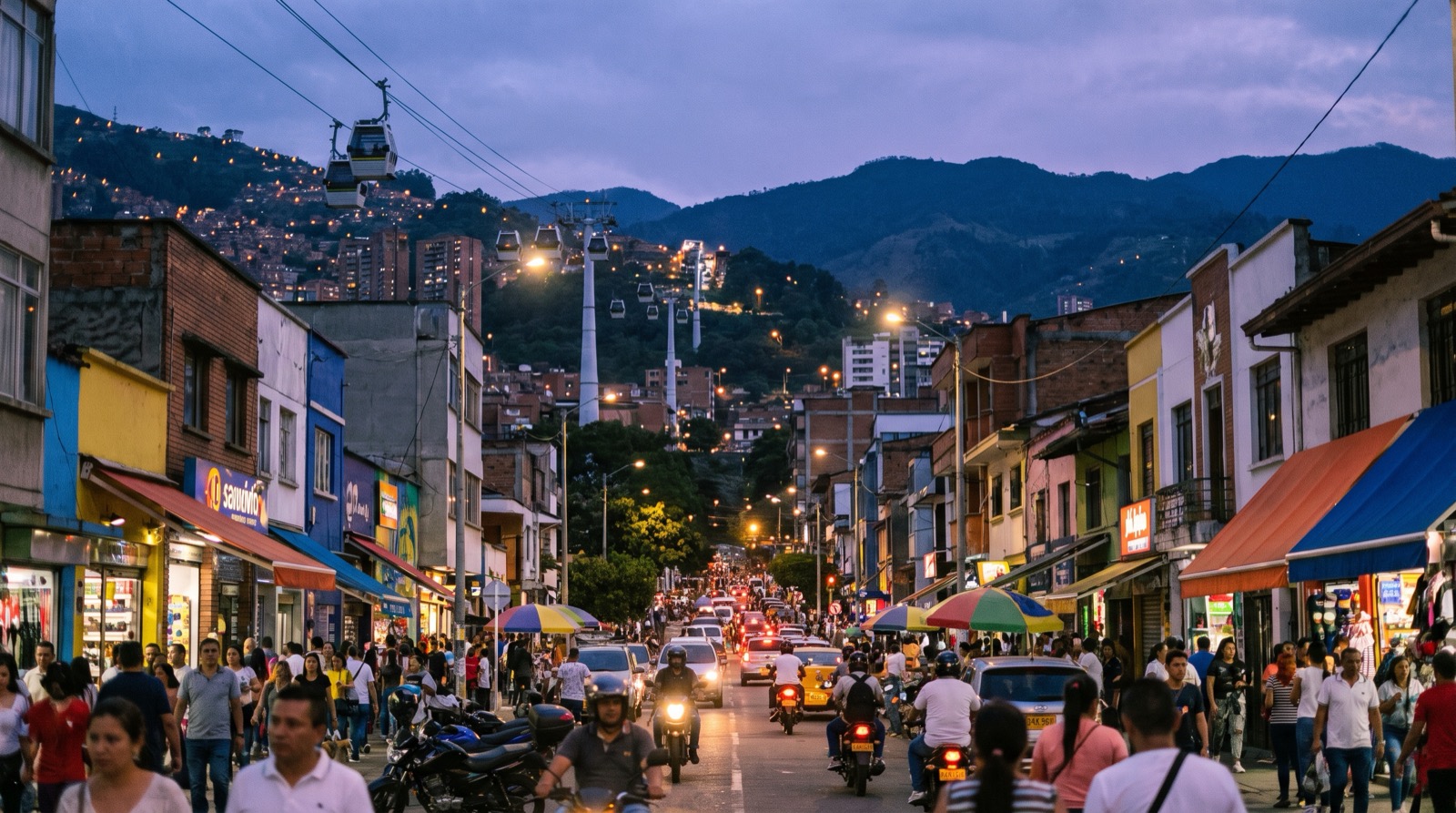
Colombia pairs stable, investment-grade cities with active conflict zones, often inside the same department, which is why a single national rating cannot drive a defensible travel decision.
What Is a Travel Risk Assessment for Colombia?
A travel risk assessment for Colombia is a structured evaluation of the security, health, and operational risks a traveler will face in the country, conducted to fulfill an employer's duty-of-care obligations before authorizing business travel. It combines government advisory data, security intelligence, and traveler-specific variables into a documented decision and mitigation plan.
Colombia currently sits at U.S. State Department Travel Advisory Level 3, Reconsider Travel, with specific Level 4, Do Not Travel, zones layered inside that broader rating. The Level 4 departments include Arauca, Cauca outside Popayan, Valle del Cauca outside Cali, Norte de Santander, and the area within 10 kilometers of the Venezuela border. A country-wide advisory level obscures this internal variance, which is why a real assessment has to work at the department level, not just the national one.
The governing international standard for this process is ISO 31030, Travel Risk Management. It defines what a defensible, audit-ready assessment needs to contain: a documented risk evaluation, a traveler risk profile, and a mitigation and monitoring plan tied to that specific trip.
Colombia's Current Risk Environment: 2026 Briefing
Corporate travelers to Colombia face four distinct but overlapping risk categories: urban crime, armed group activity, kidnapping, and civil unrest. Each behaves differently by department and requires separate mitigation planning.
Security & Crime Risks
Violent and opportunistic crime concentrates in Colombia's major cities, Bogota, Medellin, Cali, and Cartagena, where corporate travelers spend most of their time. The primary threats are robbery, express kidnapping (locally "paseo millonario," or "millionaire's ride"), a taxi-based abduction where a victim is driven between ATMs and forced to withdraw cash before release, and scopolamine attacks, where the drug is administered orally, in drinks, food, or on printed materials, to incapacitate a victim and facilitate robbery or assault.
The U.S. Overseas Security Advisory Council reported 296 U.S. citizen victims of crime in Colombia in 2024, including 122 drugging incidents. Security teams should read these figures as evidence of pattern, not proof that Colombia is uniquely dangerous among Latin American business hubs. Corporate security programs typically manage this risk through the same discipline they apply in other mid-risk mega-cities: vetted transportation, controlled item visibility, and hotel selection in low-crime zones.
Armed Group Activity: ELN, FARC Dissidents, and Clan del Golfo
Colombia's internal armed conflict has not ended, and three groups remain operationally active in specific departments. The National Liberation Army (ELN) concentrates in Catatumbo and Arauca, near the Venezuela border. Dissident factions of the former FARC, operating under names including Segunda Marquetalia, hold territory in Caqueta, Narino, and Putumayo. Clan del Golfo, a criminal and paramilitary organization built around drug trafficking, controls parts of the Pacific coast, particularly Choco.
This department-level mapping matters because no single national rating captures it: a traveler flying into Bogota faces a different risk profile than one driving into Catatumbo. In January 2025, an ELN offensive in Catatumbo killed more than 100 people and displaced over 50,000 residents, one of the conflict's most significant recent escalations. A Colombia travel policy needs to name these departments explicitly rather than relying on a single country-wide rating.
Kidnapping: Classic, Express, and Virtual
Kidnapping in Colombia takes three forms. Classic kidnapping involves extended captivity for ransom and concentrates in the conflict departments controlled by armed groups. Express kidnapping, the "paseo millonario" described above, is short-duration and cash-motivated, concentrated in urban nightlife and taxi corridors in Bogota, Medellin, and Cali. Virtual kidnapping is a phone-based extortion scam with no physical abduction, using fabricated threats to pressure victims or their families into rapid payment.
Corporate travelers are a recognized target profile for express kidnapping, particularly those visibly carrying laptops, wearing business attire, or displaying wealth signals late at night. Mitigation is straightforward: use app-based ground transport exclusively, keep devices and valuables out of sight in public, and never hail a taxi on the street.
Civil Unrest and Road Blockades
Colombia experiences frequent protest activity, locally "paro nacional" (national strike), which can shut down major roads and city centers with little advance notice. Demonstrations have included road blockades and improvised devices thrown at security forces ("papas explosivas"), particularly in Bogota, Cali, and along major highway corridors.
The operational implication is direct: ground transport routing has to account for a live protest calendar, not a static route plan. One Fortune 10 organization managing more than 500 global locations tracks crime and unrest activity across its entire footprint for exactly this reason, adjusting ground movement and site access as conditions along individual routes shift.
Is It Safe to Travel to Colombia Right Now?
Colombia is not uniformly safe or uniformly dangerous, and a single yes-or-no answer misrepresents the real risk picture. Whether travel is reasonable depends on four factors: the specific department and city, the purpose of the trip, the traveler's profile, and the mitigations in place.
Business travel to Bogota's Zona Rosa, Medellin's El Poblado, or Cartagena's tourist core, using vetted transportation and standard urban security precautions, carries a manageable risk profile comparable to other mid-risk Latin American business hubs. Travel to Arauca, Catatumbo, or the Venezuela border region is a different category of risk entirely and falls under the Level 4, Do Not Travel, designation for good reason.
For a C-suite briefing, the defensible framework is this: approve travel into Level 3 zones with documented mitigations and executive sign-off, or deny travel outright for any trip into a Level 4 department.
Colombia Regional Risk Map: Department-Level Assessment
Country-level risk ratings understate how dramatically risk varies inside Colombia. San Andres carries a fundamentally different threat profile than Arauca, despite both sitting inside the same national advisory level. A department-level risk assessment breaks the country into its constituent risk zones so security teams can make destination-specific decisions rather than applying one national rating to every trip.
The table below maps the departments and cities most relevant to corporate travel, drawing advisory language from the U.S. State Department, the UK Foreign, Commonwealth & Development Office, and Canadian government sources. Where these sources disagree, particularly on borderline departments, that disagreement is itself useful signal: it means the risk sits close to a threshold and warrants a more conservative internal rating.
Colombia Department Risk Assessment Table
Organizations managing large, distributed footprints face this same granularity problem at global scale, not just in Colombia. One global consultancy used sub-mile level intelligence to bring consistent, data-driven risk analysis to complex urban environments, producing a 35 percent efficiency lift for its analyst team, because department- and street-level intelligence, not national ratings, is what drives defensible travel decisions.
Why Is Colombia So Dangerous?
Colombia's risk profile traces to four structural factors rather than a single cause. Decades of armed conflict between the government, the FARC, the ELN, and paramilitary groups killed more than 250,000 people and displaced an estimated 6 million residents before the 2016 peace agreement, and dissident factions who rejected that agreement remain active today. Narco-trafficking geography compounds this: the same remote, hard-to-govern departments that shelter armed groups also serve as coca cultivation and trafficking corridors.
Urban crime has separate roots, driven substantially by economic inequality in Colombia's largest cities, where wealth disparity concentrates opportunistic and violent crime in specific neighborhoods and corridors rather than distributing it evenly across the urban population. The peace process itself remains incomplete: territory vacated by demobilized FARC units was not always filled by state presence, creating governance gaps that the ELN, FARC dissidents, and Clan del Golfo have moved to fill.
For a corporate security audience, the useful takeaway is that Colombia's risk is geographically concentrated and structurally explainable, not random or uniformly distributed, which is exactly why department-level assessment outperforms a single country rating.
Colombia Health Risk Assessment for Travelers
Health risk planning for Colombia has to account for both entry requirements and regional infrastructure gaps, which vary as widely across departments as security risk does.
Vaccinations Required and Recommended for Colombia
Colombia's vaccination requirements split into three tiers: mandatory, strongly recommended, and routine.
Colombia Vaccination Requirements
Malaria risk is elevation-dependent and largely irrelevant to travelers confined to Bogota (2,644 meters) or Medellin (1,495 meters), but becomes materially relevant for anyone traveling to lower-elevation departments, including most of the Amazon basin, the Pacific coast, and parts of the Caribbean coast outside the main tourist corridors. Dengue fever is a year-round risk in tropical lowland cities, including Cartagena and Barranquilla, with no vaccine widely recommended for short-term business travelers, making mosquito-bite prevention the primary control.
Medical Infrastructure by Region
Medical infrastructure in Colombia varies as sharply by region as security risk does. Private hospitals in Bogota and Medellin operate close to major U.S. and European standards, with English-speaking staff available at the largest private networks. Rural departments, particularly Choco and Guainia, have extremely limited medical infrastructure, and a serious injury or illness there typically requires medical evacuation rather than local treatment.
Employers should build evacuation timing directly into duty-of-care planning rather than assuming urban-standard response times apply everywhere. As a general planning range, evacuation from Bogota's private hospital network to a higher level of care is measured in hours; evacuation from a remote department without paved road or reliable air access can extend to a full day or more once weather and logistics are factored in. That gap should shape where a company is willing to send unaccompanied travelers at all.
Is It Safe to Travel to Bogota, Colombia?
Bogota is Colombia's primary business destination and, for corporate travelers using standard precautions, one of its lower-risk cities relative to the armed-conflict departments. The safest zones for business travelers are Zona Rosa, Parque 93, and Chapinero Alto, which concentrate international hotels, embassies, and corporate offices. Neighborhoods to avoid, particularly at night, include the historic center south of Chapinero and areas immediately surrounding the bus terminal.
The corridor between El Dorado International Airport and the city center is a recognized express kidnapping risk zone. The Head of Corporate Security for the Americas at a global reinsurance company has described this risk directly: employees have been targeted for express kidnapping simply for carrying laptops openly in Bogota, underscoring that visible business equipment, not just cash or jewelry, drives targeting decisions.
Taxi protocol should be app-only, never a street hail, and airport arrivals should default to a pre-booked, verified driver or hotel car service. ATM withdrawals should happen inside bank branches or hotels rather than street-facing machines. Bogota sits at 2,644 meters elevation, and altitude acclimatization, mild headache, fatigue, and shortness of breath in the first 24 to 48 hours, should be built into any itinerary that schedules meetings on arrival day.
Is It Safe to Travel to Cartagena, Colombia?
Cartagena presents a sharp risk differential between its walled tourist core and its outer neighborhoods. The historic center, Bocagrande, and Getsemani carry a manageable risk profile for business travelers using standard precautions, while neighborhoods outside the tourist zone carry meaningfully higher crime risk and receive far less police presence.
Dating-app-facilitated assault and scopolamine-related incidents are a documented risk pattern in Cartagena specifically, flagged in both OSAC reporting and Canadian government travel advisories, and disproportionately affect travelers who meet strangers through apps and then relocate to a private location. Corporate travel policies should address this directly rather than leaving it as an unstated assumption.
Tourist boat excursions carry their own risk profile: overloading and inadequate safety equipment on smaller vessels are recurring problems, and the December-to-January period brings rougher seas that increase the risk of maritime incidents. Business travelers should book excursions only through vetted, hotel-recommended operators.
Transportation Risk Assessment: Ground, Air, and Maritime
Ground, air, and maritime transportation each carry distinct risk profiles in Colombia, and a complete travel risk assessment has to address all three rather than defaulting to airport-and-hotel planning alone.
Ground transport should be app-based rideshare or a vetted corporate driver exclusively. The U.S. Embassy in Bogota advises against street taxis, motorcycles, and public transportation for its own personnel, a standard worth adopting for corporate travelers as well. Intercity ground travel carries meaningfully higher risk at night, on secondary roads, and near the conflict departments identified earlier, and should generally be avoided in favor of domestic flights.
Domestic aviation on Colombia's major carriers meets FAA safety standards, but charter flights serving remote extractive sites, mining and oil operations in particular, require separate vetting of the operator and aircraft, since these routes fall outside the major-carrier safety net. Maritime risk concentrates around tourist vessels off Cartagena and San Andres, where overloading and inadequate safety equipment recur as incident causes.
Organizations managing logistics routes at scale have applied a similar route-level intelligence model: one global third-party logistics provider used five-mile radius analysis around transport routes, paired with monthly-updated risk scoring, to move from reactive incident response to proactive route planning, a model directly transferable to corporate ground travel routing in Colombia.
Natural Hazard Assessment: Volcanoes, Earthquakes, and Flooding
Colombia's Andean geography creates meaningful natural hazard exposure alongside its security risks. Nevado del Ruiz, an active volcano near Manizales, has a documented history of deadly eruptions and remains under periodic alert-level monitoring; travel through the Manizales corridor during an elevated alert phase warrants itinerary review. Galeras, near Pasto in Narino department, carries similar volcanic risk.
The Andean corridor also sits in a seismically active zone, and earthquakes of varying magnitude occur with some regularity, though building codes in major cities have improved substantially since Colombia's most destructive historical earthquakes. Seasonal flooding is more predictable: Colombia's two rainy seasons, March through May and October through November, bring flooding and landslide risk in mountainous and low-lying regions alike.
The practical implication for corporate travel policy is straightforward: build a review trigger into the approval workflow so a volcanic alert-level change or a La Nina-driven flooding event automatically prompts a second look at any trip routed through the affected corridor, rather than relying on travelers to self-report changing conditions.
Colombia Travel Advisory History and How to Read It
The U.S. State Department uses a four-level travel advisory system: Level 1 (Exercise Normal Precautions), Level 2 (Exercise Increased Caution), Level 3 (Reconsider Travel), and Level 4 (Do Not Travel). Colombia currently sits at Level 3 nationally, with specific Level 4 sub-zones layered inside that broader rating, a structure the State Department reserves for a handful of countries where risk varies too sharply by region for a single national level to be useful.
Colombia's advisory history reflects the country's political trajectory: ratings loosened following the 2016 peace agreement and subsequent years of relative stability, then tightened again as the Petro administration's "Total Peace" negotiations with the ELN stalled and armed group activity in Catatumbo and other departments escalated.
Other governments rate Colombia differently. The UK's FCDO and Canada's travel advisory both flag similar high-risk departments but use different rating scales and, in some cases, draw different boundaries around specific zones. Security teams operating under multiple national jurisdictions should default to whichever government's advisory is most conservative for a given department when the two disagree.
Colombia Travel Advisory 2026: What Has Changed
Three developments should inform any Colombia travel risk assessment conducted in 2026. First, the State Department's March 2026 advisory update added a Natural Disaster (N) indicator to Colombia's rating, reflecting increased volcanic and flooding risk alongside the existing security-driven rating. Second, the January 2025 ELN offensive in Catatumbo, which killed more than 100 people and displaced over 50,000 residents, has had a lasting effect on displacement patterns and armed group positioning in Norte de Santander and Arauca that persists into 2026. Third, an August 2025 attack on a military air base near Cali underscored that armed group activity is not confined to the traditionally understood conflict departments alone.
Layered on top of these events, the 2025 suspension of ELN peace talks removed the near-term prospect of a negotiated de-escalation in the departments most affected by the group's activity. For a security manager building a 2026 assessment, the practical takeaway is that Catatumbo-adjacent departments and the Cali corridor warrant closer monitoring than the department-level table above would suggest based on 2024 data alone.
How to Conduct a Corporate Travel Risk Assessment for Colombia: Step-by-Step Framework
Conventional wisdom holds that travel risk assessments are quick, automated processes that take minutes. The security team at one Fortune 10 retailer found the opposite: manual travel risk assessment was consistently their most time-consuming, resource-draining process, and Colombia's department-level variance makes a shortcut version actively dangerous. The five-step framework below builds a defensible, ISO 31030-aligned assessment specifically for Colombia.
Step 1: Establish a Country Risk Baseline
Start with a numeric risk rating, typically on a 1-to-5 scale, at the country level, sourced from government advisories (State Department, OSAC, FCDO) and commercial threat intelligence platforms. International SOS, for example, publicly rates Colombia "High" at 3.3 out of 5. Whatever baseline a security team uses, it should be documented, sourced, and dated, since ISO 31030 requires a traceable methodology, not just a conclusion.
Step 2: Apply a Department and City-Level Overlay
A country-level baseline is not sufficient for Colombia given how sharply risk varies by department: San Andres rates Low while Arauca rates Extreme. Adjust the baseline up or down based on the traveler's specific destination using the department risk table above. Organizations managing complex urban environments have found that sub-mile level intelligence, rather than city-wide averages, is what actually drives accurate risk evaluation, since crime and unrest concentrate in specific corridors rather than distributing evenly across a city.
Step 3: Build a Traveler Profile Risk Adjustment
Adjust the department-level rating further based on traveler-specific variables: gender, solo travel status, visible wealth signals, Spanish language proficiency, prior Colombia experience, relevant medical conditions, and role (executive versus field engineer versus humanitarian worker). The Senior Manager of security operations at a Fortune 500 enterprise technology company has put it directly: what matters most in unfamiliar regions is the risk of kidnapping and the risk of being targeted specifically as a foreigner, both of which vary by traveler profile, not just location. Employees from low-crime home markets often carry the least developed situational awareness for higher-risk regions like Latin America, which argues for building awareness training directly into the risk adjustment.
Step 4: Design a Mitigation and Approval Plan
Translate the adjusted risk rating into concrete controls: a vetted hotel selection (4-star minimum, located in Zona Rosa, Parque 93, or an equivalent low-crime zone), app-only ground transportation with meet-and-greet service at El Dorado, a no-night-driving rule, encrypted communications for sensitive itineraries, and insurance coverage that includes political evacuation and kidnap-and-ransom riders. A pre-travel security briefing covering the specific department and city risk profile should be mandatory, not optional, before departure.
One Fortune 500 travel company used street-level intelligence to move its executive protection function from reactive advance work to same-day advance planning across more than 15 global destinations, a model directly applicable to advance work for Colombia trips.
Step 5: Implement Ongoing Monitoring and Escalation Protocols
Ongoing monitoring during the trip, not just pre-trip approval, closes the loop on a Colombia travel risk assessment. A global security operations center (GSOC) workflow should track department-level conditions and monthly-updated risk scoring for the traveler's specific route, with defined escalation triggers: an armed group incident, a paro nacional call, or a volcanic alert-level change should each prompt a specific response, up to and including emergency extraction.
Platforms built for this purpose consolidate street-level threat intelligence and monthly-updated risk scoring into a single reference point, so analysts spend less time aggregating incident feeds from disparate sources and more time on judgment calls that actually require a human analyst. The Head of Corporate Security for the Americas at a global reinsurance company has estimated the cost of skipping this discipline: outdated assessment methods can drive six figures annually in unnecessary precautionary travel for a single security team. One Fortune 10 organization solved this at scale, unifying crime and unrest tracking across more than 500 global locations in a single system.
Duty-of-Care Legal Obligations When Sending Employees to Colombia
Duty of care is an employer's legal and ethical obligation to take reasonable steps to protect employee health, safety, and wellbeing while traveling on company business. For Colombia specifically, given its elevated risk profile, that obligation carries more legal weight, and more exposure if ignored, than it does for lower-risk destinations.
Several jurisdictions codify this obligation explicitly. The UK's Health and Safety at Work Act extends employer liability to work-related travel and aligns closely with ISO 31030's documentation requirements. France's Loi Sapin II imposes broader corporate risk-prevention obligations that courts have applied to international travel decisions. Australia's Work Health and Safety Act imposes a similar duty on employers sending staff overseas. U.S. employers face a related exposure through ordinary negligence standards, where a documented failure to assess and mitigate known risk before authorizing travel to a Level 3 or Level 4 destination becomes evidence in any resulting litigation.
The practical implication across all four jurisdictions is the same: a documented, dated, department-specific travel risk assessment is the primary legal defense if an incident occurs. An undocumented decision, even a well-reasoned one, offers no defense at all. Duty-of-care requirements have become a primary driver of corporate security budget, not an afterthought to it; one global online travel company has cited duty-of-care obligations directly as justification for its own security intelligence investment.
Colombia Travel Risk Assessment Tools and Platforms: How to Evaluate Your Options
Evaluating tools for a Colombia travel risk assessment starts with understanding that no single vendor covers the entire problem. Security intelligence for travel splits into three layers: medical and health intelligence, well covered by established medical assistance providers; operational and street-level intelligence, department- and neighborhood-specific crime, unrest, and armed group data; and strategic and geopolitical intelligence, broad country-level forecasting. Most travel security programs are over-served on the first and third layers and under-served on the second, which is exactly where Colombia's risk is concentrated.
Colombia Travel Risk Tool Comparison
The Head of Corporate Security for the Americas at a global reinsurance company has described the gap directly: established medical and travel security platforms are useful for baseline guidance, vaccination reminders, and general advisories, but do not answer the operational question a security team actually needs answered, which of Colombia's neighborhoods, corridors, or venues carry the highest risk right now. That same source described managing a stack of five separate tools that collectively cover a fraction of the intelligence a team actually needs, each addressing a narrow slice of the problem. Base Operations is built specifically for that operational, street-level layer, complementing rather than replacing event-driven alert platforms and medical assistance providers a security program already uses.
Base CoPilot, Base Operations' free threat assessment tool, generates a department- and city-level risk report for any Colombia destination in seconds at copilot.baseoperations.com, a useful starting point before committing to a full enterprise assessment.
Check-Mig Colombia: Entry Requirements for 2026
Check-Mig is Colombia's mandatory digital pre-registration system for all travelers entering by air, land, or sea. Registration must be completed online between 1 and 72 hours before arrival and requires passport details, flight or transport information, accommodation address in Colombia, and emergency contact information.
Travelers who arrive without completing Check-Mig registration face delays at the immigration checkpoint and, in some cases, are required to complete the form on-site, which is materially slower than pre-registering. Colombia's government has adjusted the associated entry fee in recent years, so travel policies should point staff to the official migracioncolombia.gov.co site for current pricing rather than publishing a fixed figure that can go stale.
For corporate travel programs, the practical fix is procedural: build Check-Mig registration into the standard pre-trip checklist, timed to the 72-hour window, rather than leaving it to individual travelers to remember.
Frequently Asked Questions
What is Colombia's current U.S. State Department travel advisory level?
Colombia is rated Level 3, Reconsider Travel, by the U.S. State Department, with specific Level 4, Do Not Travel, zones layered inside that national rating. The Level 4 departments are Arauca, Cauca outside Popayan, Valle del Cauca outside Cali, Norte de Santander, and the area within 10 kilometers of the Venezuela border.
What are the Level 4 "Do Not Travel" zones in Colombia?
The U.S. State Department designates five Level 4 zones in Colombia: Arauca department, Cauca department excluding the city of Popayan, Valle del Cauca department excluding the city of Cali, Norte de Santander department, and the area within 10 kilometers of the Venezuela border. These zones see active armed group operations by the ELN, FARC dissidents, or related organizations.
Is it safe for solo travelers to visit Bogota on business?
Solo business travel to Bogota is manageable with specific precautions: use app-based transportation exclusively rather than street taxis, avoid displaying laptops or valuables in public, withdraw cash only at bank branches or hotels rather than street ATMs, and stay in vetted zones such as Zona Rosa, Parque 93, or Chapinero Alto. Solo travelers, particularly those unfamiliar with the city, face elevated targeting risk for express kidnapping.
What vaccinations are required to enter Colombia?
Yellow fever vaccination is required only for travelers arriving from Angola, Brazil, the Democratic Republic of Congo, or Uganda. Colombia does not require yellow fever vaccination for travelers arriving directly from the United States, Europe, or most of Asia. Hepatitis A, typhoid, hepatitis B, and region-dependent malaria prophylaxis are strongly recommended for most business travelers.
What does ISO 31030 require for a Colombia travel risk assessment?
ISO 31030 is the international standard for travel risk management. For Colombia, it requires a documented, risk-proportionate assessment that accounts for department-level variance, a traveler-specific risk profile, a mitigation plan tied to the specific trip, and an ongoing monitoring and review process, rather than a single static country-level rating applied uniformly to every trip.
What is scopolamine and how does it affect travelers in Colombia?
Scopolamine is a drug that can incapacitate a victim within minutes when administered orally, in drinks, food, or on printed materials handed to a target, after which it facilitates robbery or assault. It is most frequently reported in Bogota and Cartagena's nightlife and tourist areas, and Colombia recorded 122 drugging incidents involving U.S. citizens in 2024, according to OSAC. Travelers should never accept food, drinks, or items from strangers.
How quickly can a medical evacuation be arranged from Bogota?
Evacuation timing from Bogota's private hospital network, which operates close to U.S. and European standards, is typically measured in hours given the city's international airport access and established medical infrastructure. Evacuation from remote departments such as Choco or Guainia, which lack paved roads or reliable air access, can extend to a full day or more, a gap employers should build directly into duty-of-care planning.
What is express kidnapping (Paseo Millonario) and how do corporate travelers avoid it?
Express kidnapping, known locally as "paseo millonario" or "millionaire's ride," is a short-duration, taxi-based abduction where a victim is driven between ATMs and forced to withdraw cash before release. It concentrates in urban nightlife and taxi corridors in Bogota, Medellin, and Cali. Corporate travelers avoid it by using app-based transportation exclusively, never hailing taxis on the street, and keeping valuables and devices out of public view.
Does a Colombia travel risk assessment differ for oil and mining sector employees vs. general business travelers?
Yes. Extractive-sector employees typically work in or transit through higher-risk departments, including areas with active armed group presence, and face elevated kidnapping risk compared to general business travelers confined to Bogota or Medellin. Industry standard practice for this profile is a formal Journey Management Plan, which documents approved routes, check-in cadence, and escalation procedures for every movement between sites, not just the overall trip.
What should an employer's travel policy say about Colombia?
A Colombia travel policy should specify five minimum elements: an approval threshold tied to destination risk level (who can authorize travel to Level 3 versus Level 4 zones), explicitly named prohibited departments and zones, a required communication and check-in protocol during the trip, minimum insurance requirements including political evacuation and kidnap-and-ransom coverage, and a documentation requirement for the underlying risk assessment itself.
Colombia's risk environment changes gradually, but it does change: department-level conditions, advisory status, and armed group activity all shift over the course of a year. Base Operations provides monthly-updated BaseScore™ ratings across Colombia's departments and more than 5,000 cities worldwide, giving security teams a documented, defensible baseline for every travel decision. Request a demo to see department-level Colombia risk data inside your own travel approval workflow.
Takeaways

Join 1100+ security leaders getting new ideas on how to better protect their people and assets.